
Video games have come a long way from their humble beginnings as simple, pixelated entertainment. Today, they are a dominant cultural force, engaging millions of people around the world. With their rich stories, complex gameplay mechanics, and immersive worlds, video games have established themselves as one of the most influential and lucrative forms of entertainment. But how did we go from playing basic games like Pong to navigating sprawling, open-world universes? In this post, we’ll explore the fascinating history of video games, their cultural impact, the rise of competitive gaming, and what the future holds for this ever-evolving industry.
The Birth of Video Games: A Simple Start
The story of video games begins in the early 1950s when computer scientists began experimenting with ways to use technology for entertainment. In 1952, a British programmer named A.S. Douglas created one of the first known video games, OXO, a digital version of tic-tac-toe. Although basic, OXO demonstrated the potential of using computers to simulate interactive experiences.
The breakthrough moment for video games came in 1958, when William Higinbotham, a physicist at Brookhaven National Laboratory, created Tennis for Two. This rudimentary tennis simulation was displayed on an oscilloscope, allowing two players to control paddles and compete against each other. While Tennis for Two was short-lived, it marked the beginning of video games as a form of interactive entertainment.
In 1972, the release of Pong, a simple two-player game simulating table tennis, by Atari revolutionized the gaming industry. Pong became the first commercially successful arcade game, sparking a wave of interest in video games. This marked the birth of the video game industry as we know it today. What followed was a surge of arcade machines and home consoles, and by the late 1970s and early 1980s, video games were firmly established as a mainstream form of entertainment.
The Golden Age of Arcade Games and the Rise of Consoles
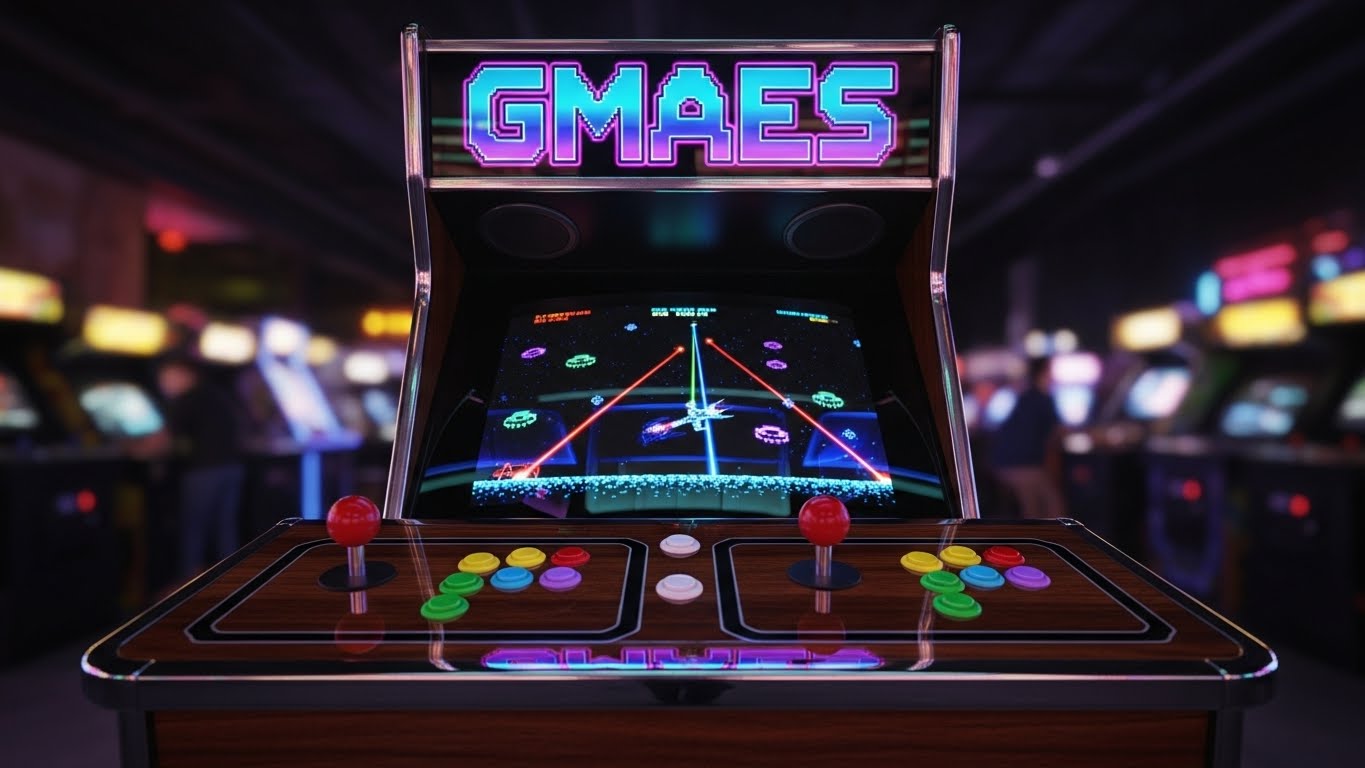
The 1980s is often referred to as the “golden age” of arcade games. The popularity of arcade machines soared, with games like Space Invaders (1978), Pac-Man (1980), and Donkey Kong (1981) becoming iconic staples of the gaming world. These games were simple in design but highly addictive, and players flocked to arcades in search of high scores and bragging rights. During this period, video game culture began to take shape, with dedicated fans, tournaments, and even magazines dedicated to the growing industry.
In parallel, home consoles began to gain popularity, allowing players to experience video games in the comfort of their own homes. In 1983, the Nintendo Entertainment System (NES) was released, and it quickly became a game-changer. With games like Super Mario Bros., The Legend of Zelda, and Metroid, the NES set a new standard for what home gaming could be. Nintendo’s innovation, especially in terms of game design, led to the widespread adoption of home consoles, marking the beginning of the console wars that would define the industry for years to come.
Sega, another major player in the gaming world, introduced the Sega Genesis in 1988. The rivalry between Sega and Nintendo helped push both companies to innovate, leading to a golden age of console gaming. Meanwhile, arcade games began to evolve, becoming more complex and visually impressive, with titles like Street Fighter II (1991) and Mortal Kombat (1992) revolutionizing the fighting game genre.
The 3D Revolution and the Growth of Immersive Worlds
The 1990s were a defining decade for the video game industry, as 3D graphics began to change the way games were designed and experienced. The introduction of 3D-rendered environments allowed for more immersive gameplay and more complex worlds. The release of the Sony PlayStation in 1994 and the Nintendo 64 in 1996 marked a turning point, as both consoles introduced players to fully three-dimensional gaming.
One of the most influential games of this era was Super Mario 64, which was released alongside the Nintendo 64. This game was revolutionary because it offered players the first true 3D platforming experience, allowing them to move Mario through expansive, open worlds with unprecedented freedom. The game’s use of camera control, exploration, and level design set a new standard for 3D games and influenced countless titles in the years to come.
Meanwhile, on the Sony PlayStation, games like Final Fantasy VII (1997) and Metal Gear Solid (1998) showcased the potential for complex narratives, cinematic cutscenes, and detailed character development. These titles helped elevate video games from a form of entertainment to an art form, and they demonstrated how video games could engage players emotionally in ways that were previously thought impossible.
The rise of 3D gaming also led to the development of new genres. First-person shooters like Doom (1993) and GoldenEye 007 (1997) introduced players to immersive, fast-paced action, while role-playing games (RPGs) like The Elder Scrolls III: Morrowind (2002) and The Legend of Zelda: Ocarina of Time (1998) allowed players to explore vast, open worlds filled with quests, characters, and lore.
The 2000s: Online Gaming, the Rise of Mobile, and Indie Games
As the 21st century began, the video game industry experienced another major shift with the rise of online gaming. The proliferation of high-speed internet connections allowed players to connect with others around the world, leading to the growth of multiplayer games. Games like Halo 2 (2004) and World of Warcraft (2004) ushered in the era of online multiplayer, allowing people to compete, cooperate, and form communities across vast distances.
The success of online gaming led to the birth of eSports, where competitive gamers began to make a name for themselves in tournaments watched by millions of fans. Games like League of Legends, Counter-Strike, and Dota 2 became household names, and professional gaming leagues started to attract sponsors, offering hefty prizes and professional contracts to top players. eSports has since evolved into a global phenomenon, with events drawing crowds to massive stadiums and generating millions of dollars in revenue.
The 2000s also saw the rise of mobile gaming, thanks to the widespread adoption of smartphones. Simple games like Angry Birds (2009) and Candy Crush Saga (2012) became global sensations, demonstrating how accessible and addictive mobile games could be. With millions of people now carrying powerful gaming devices in their pockets, mobile gaming became a multi-billion-dollar industry, and companies like Apple and Google began to recognize the potential for app stores to distribute games directly to consumers.
Meanwhile, the indie gaming scene exploded, with small teams and individual developers creating innovative games that challenged traditional industry norms. Titles like Braid (2008), Limbo (2010), and Minecraft (2011) gained massive followings, proving that creativity and passion could thrive outside of the big-budget studios. These indie games often pushed the boundaries of storytelling, gameplay, and art direction, contributing to the growing recognition of video games as a legitimate medium for artistic expression.
The Modern Era: 4K Gaming, Virtual Reality, and Cloud Gaming
The 2010s and beyond have seen the video game industry continue to innovate at a breakneck pace. The introduction of 4K resolution and HDR graphics has led to more visually stunning games, with titles like Red Dead Redemption 2 (2018) and The Witcher 3: Wild Hunt (2015) showcasing the power of modern gaming hardware. The level of detail and realism in these games is unparalleled, with lifelike character models, sprawling open worlds, and dynamic weather systems creating immersive experiences that transport players to entirely new worlds.
Virtual reality (VR) has also emerged as a promising new frontier for gaming. With devices like the Oculus Rift, PlayStation VR, and HTC Vive, players can step into fully immersive virtual worlds and interact with them in ways that were once confined to science fiction. VR gaming is still in its early stages, but it’s clear that the technology has the potential to revolutionize the way we play games, offering unparalleled levels of immersion.
Cloud gaming is another exciting development in the world of video games. Services like Google Stadia, Xbox Cloud Gaming, and NVIDIA GeForce Now allow players to stream games directly to their devices, bypassing the need for expensive consoles or powerful gaming PCs. Cloud gaming has the potential to democratize gaming, making high-quality games accessible to anyone with an internet connection, regardless of their hardware.
The Future of Gaming: AI, Interactive Narratives, and the Metaverse
Looking ahead, the future of gaming is filled with possibilities. Artificial intelligence (AI) is set to play a major role in shaping the next generation of games. AI could be used to create more dynamic, responsive worlds, where NPCs (non-playable characters) behave in more realistic and unpredictable ways. Imagine a game world where every character has its own personality, goals, and reactions to your actions, making each playthrough unique.
Interactive narratives are also likely to become more prevalent in the coming years. Games like Detroit: Become Human (2018) and The Witcher 3 already feature branching storylines that change based on player decisions, but the future could bring even more advanced systems where player choices have a deeper and more lasting impact on the game world.