
In a world that is constantly evolving, the concept of “games” has remained a cornerstone of entertainment for people of all ages. From the traditional board games we grew up with to the most sophisticated virtual worlds we explore today, games have been a key part of human culture for centuries. But what exactly is it about games that make them so universally appealing? Why do they continue to captivate and challenge us, no matter how technology progresses?
In this blog post, we will explore the evolution of games, their impact on society, and how they continue to shape our understanding of play and entertainment. Whether it’s traditional tabletop games, video games, or mobile apps, games have become an essential part of modern life. Let’s dive into the fascinating world of games and discover what makes them so special.
The Origins of Games
The history of games dates back to ancient civilizations, with evidence suggesting that humans have been playing games for over 5,000 years. Early games were often used for ritualistic, educational, or strategic purposes. The ancient Egyptians, for instance, played Senet, one of the earliest known board games. Archaeological finds suggest that the game involved moving pieces along a grid, with rules believed to be related to fate and the afterlife.
Similarly, games like Go (originating in China over 2,500 years ago) and chess (which has its roots in India and Persia) are prime examples of games that not only entertained but also trained individuals in strategic thinking and decision-making. These ancient games laid the foundation for the strategic and competitive elements that are now central to modern gaming.
With the development of new tools and technologies, games evolved into various forms, from outdoor sports and physical games to more structured and interactive forms. As societies advanced, so did the complexity and variety of games, reflecting different cultures, values, and interests.
The Evolution of Tabletop Games
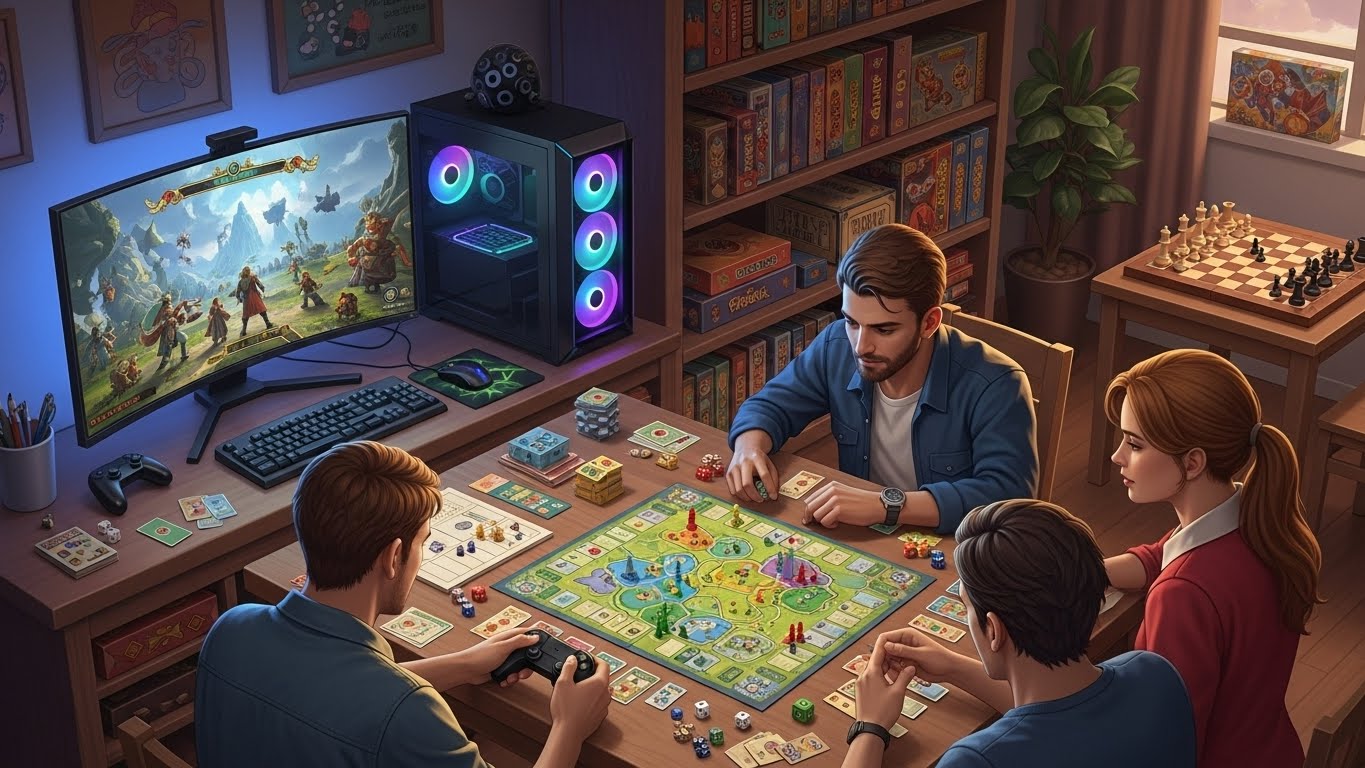
While video games and digital entertainment dominate the gaming world today, tabletop games—board games, card games, and role-playing games (RPGs)—continue to hold a special place in the hearts of players worldwide. These games, which require no digital devices or screens, often bring people together around a physical table for social interaction and fun.
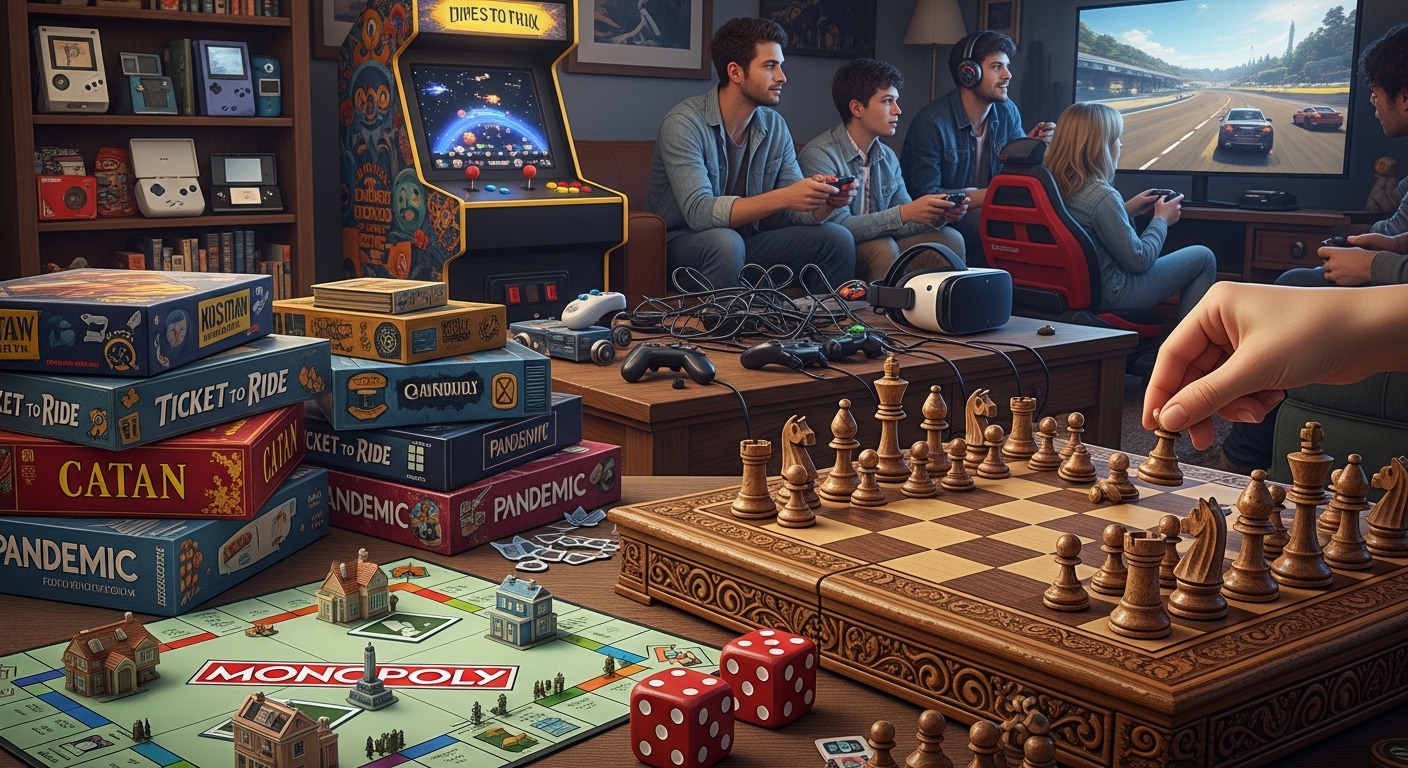
In the 20th century, tabletop games saw a huge surge in popularity. Classic games like Monopoly, Scrabble, Clue, and Risk became household staples, offering hours of entertainment for families and friends. These games typically combined elements of luck, strategy, and social interaction, making them enjoyable for players of all skill levels.
Board games like Dungeons & Dragons also emerged, marking the birth of the modern role-playing game (RPG) genre. RPGs opened up new realms of creativity, where players could immerse themselves in fictional worlds and assume different characters with unique abilities and traits. The growing popularity of tabletop RPGs provided the foundation for digital role-playing games, which would eventually lead to the explosion of MMORPGs (Massively Multiplayer Online Role-Playing Games) and video game franchises like Final Fantasy and The Elder Scrolls.
The Social Aspect of Tabletop Games
What makes tabletop games particularly special is their emphasis on social interaction. Unlike digital games, which can sometimes be isolating, tabletop games foster face-to-face interaction, teamwork, and friendly competition. Whether it’s strategizing with teammates in a game of Catan or bluffing your way through a hand of Poker, tabletop games bring people together in a shared, tangible space.
In recent years, we’ve seen a resurgence of interest in tabletop games, thanks to the growth of board game cafes, game nights, and crowdfunding platforms like Kickstarter that support indie board game creators. New titles are being released regularly, and many of them have incorporated innovative mechanics and themes that cater to a wide variety of players.
The Rise of Video Games: A New Era of Play
As technology advanced, so did the way we played games. The 1970s marked the beginning of the video game revolution, with arcade machines like Pong and Space Invaders capturing the imagination of millions. These early games were simple in design, but their addictive gameplay and competitive nature set the stage for the explosive growth of the video game industry in the decades that followed.
The 1980s saw the emergence of home console gaming, with systems like the Nintendo Entertainment System (NES) and Sega Genesis making it possible for people to play video games in their living rooms. Iconic franchises like Super Mario Bros., The Legend of Zelda, and Sonic the Hedgehog became household names, attracting millions of players worldwide and setting the standard for what a video game could be.
Video games were no longer just a novelty or an arcade attraction; they were becoming an integral part of entertainment culture. As technology progressed, video games evolved into more complex, immersive experiences. The 1990s introduced 3D graphics, with games like Super Mario 64 and The Legend of Zelda: Ocarina of Time setting new standards for visual quality, gameplay mechanics, and storytelling.
Modern Video Games: Interactive Worlds and Cutting-Edge Technology
Fast forward to today, and the video game industry is more dynamic than ever. Video games have evolved into massive, interactive worlds that allow players to explore, create, and collaborate with others in ways that were once unimaginable.
The rise of open-world games, such as The Witcher 3: Wild Hunt, Red Dead Redemption 2, and Grand Theft Auto V, has allowed players to immerse themselves in vast digital landscapes filled with detail, choice, and consequences. These games are not simply linear narratives but rather living, breathing worlds where players can engage in a wide variety of activities—whether it’s battling enemies, crafting items, or simply exploring the landscape.
The advancement of virtual reality (VR) and augmented reality (AR) technologies has further pushed the boundaries of what games can be. VR allows players to fully immerse themselves in a digital environment, using specialized headsets and controllers to interact with the game world. Titles like Beat Saber and Half-Life: Alyx demonstrate the potential of VR to create truly engaging and lifelike experiences.
On the other hand, AR games like Pokémon GO have become a cultural phenomenon by blending the real world with digital elements. Players explore their surroundings while encountering virtual creatures, offering a fun and active way to engage with the game.
Esports and Competitive Gaming
One of the most significant developments in the gaming world over the past decade has been the rise of esports. What began as small tournaments for games like StarCraft and Counter-Strike has exploded into a global industry worth billions of dollars. Esports tournaments are now held in massive arenas, with millions of viewers tuning in to watch top players compete in games like League of Legends, Dota 2, and Fortnite.
Esports has transformed gaming into a legitimate professional career for many players, with sponsorships, streaming platforms like Twitch, and multi-million-dollar prize pools offering new opportunities for talent. In fact, esports has become so popular that it’s now featured as a part of global events like the Asian Games, with discussions about making esports an Olympic event.
The Mobile Gaming Revolution
In addition to console and PC gaming, mobile gaming has grown to become one of the most important segments of the gaming industry. With the proliferation of smartphones, millions of people now have access to games right in their pockets. Games like Candy Crush Saga, Clash of Clans, and PUBG Mobile have become global sensations, attracting players from all walks of life.
Mobile games are often designed to be easy to pick up and play, making them accessible to casual gamers who may not have the time or interest in more complex console games. The rise of free-to-play games and the introduction of in-app purchases have also reshaped the way games are monetized, allowing developers to reach broader audiences.
Mobile gaming has also facilitated the rise of social gaming, with many titles offering multiplayer experiences where players can connect with friends or strangers from around the world. Whether it’s competing in a puzzle game, teaming up in a battle royale, or solving challenges in a trivia game, mobile gaming has created a new space for social interaction and online communities.
The Future of Gaming: What’s Next?
The world of games is constantly evolving, and it’s impossible to predict exactly where it will go in the future. However, there are several trends that are likely to shape the next generation of gaming experiences.
1. Cloud Gaming
With platforms like Google Stadia and Xbox Cloud Gaming, cloud gaming has the potential to change the way we play forever. Cloud gaming allows players to stream games directly to their devices, eliminating the need for powerful hardware or downloads. This could democratize access to high-quality gaming, making it possible to play demanding titles on low-end devices.
2. AI and Procedural Generation
Artificial intelligence and procedural generation techniques are poised to revolutionize the way games are designed. With AI, games can become more adaptive, creating unique experiences based on the player’s actions. Procedural generation allows for endless, ever-changing game worlds that never feel the same, ensuring that no two playthroughs are identical.
3. Increased Immersion and Interactivity
As VR and AR technologies continue to advance, games will become even more immersive. We can expect greater interaction with the game world and more personalized experiences tailored to individual players. Whether it’s through fully immersive VR worlds or interactive storytelling techniques, the future of gaming will likely blur the line between reality and the virtual world.