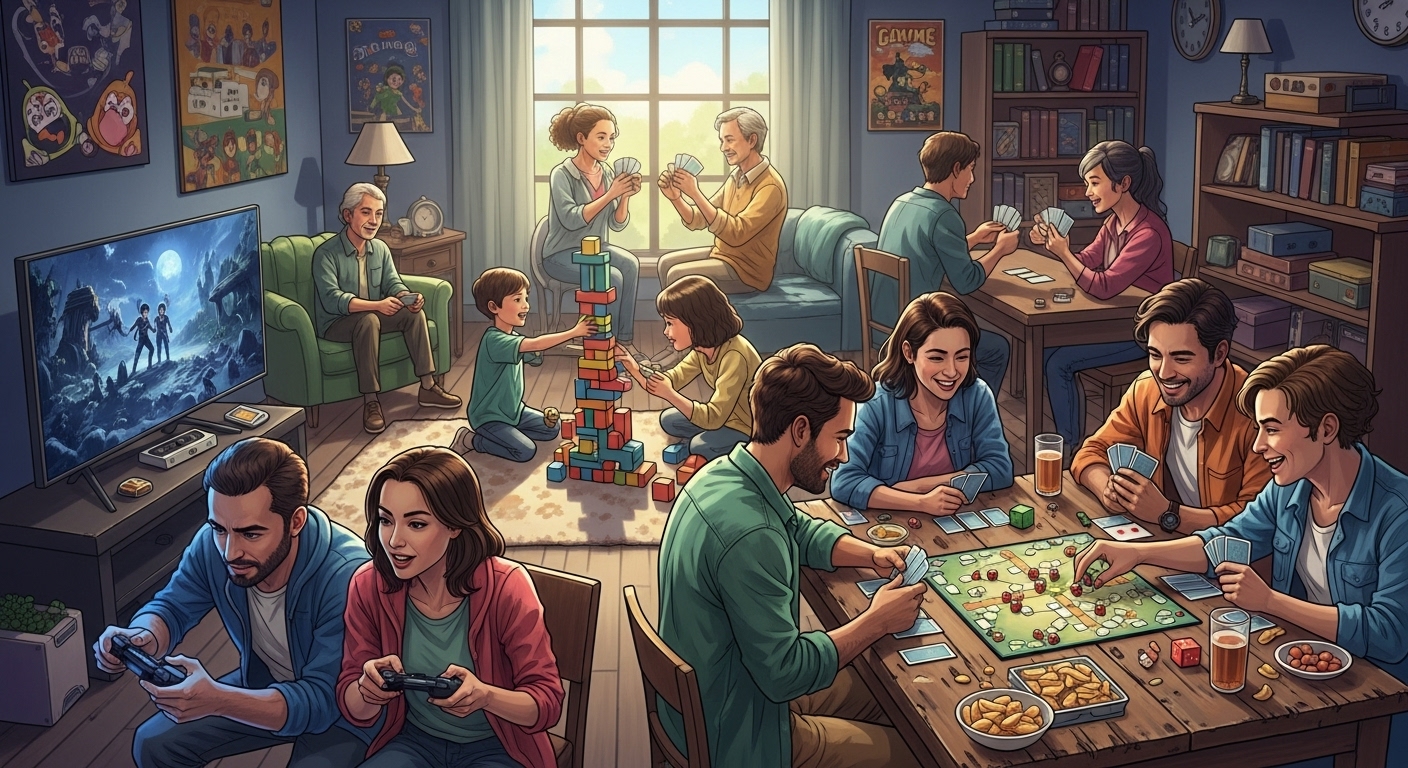


Video games have evolved from simple pixelated screens to complex, immersive experiences that captivate millions of players across the globe. What once started as a niche form of entertainment has now become a multi-billion-dollar industry that spans multiple platforms, genres, and cultures. From the humble beginnings of Pong to the cinematic experiences of games like The Last of Us Part II, video games have come a long way, and their impact on entertainment, culture, and technology cannot be overstated.
In this blog post, we will explore the evolution of video games, the different genres that have shaped the gaming experience, and the role of games in modern-day society. Whether you’re a seasoned gamer or someone just beginning to explore the world of video games, there’s no denying that gaming has become a cultural phenomenon, and it’s only getting bigger.
The Early Days: Simple Beginnings
The history of video games can be traced back to the 1950s and 1960s when early experiments in computer technology began to explore interactive entertainment. One of the first widely recognized video games was Pong, created by Atari in 1972. Pong was a simple two-player game that simulated table tennis, with players using paddles to hit a ball back and forth on the screen. Its straightforward concept and engaging gameplay made it an instant success, spawning the birth of the gaming industry.
As the 1970s progressed, arcade gaming exploded. Titles like Space Invaders, Asteroids, and Pac-Man became cultural icons, captivating millions of players in arcades across the globe. The simplicity of these games made them accessible to a wide range of people, and their addictive nature ensured they became a staple of popular culture. During this time, the idea of games being a social experience—gathering with friends or strangers to compete for high scores—became firmly established.
The 1980s marked a significant shift as home gaming consoles began to gain traction. The introduction of the Atari 2600 in 1977 allowed people to bring the arcade experience into their living rooms, and soon, gaming became an activity enjoyed by individuals and families alike. The success of home consoles paved the way for the next generation of gaming, with major players like Nintendo and Sega entering the fray and revolutionizing the industry.
The Golden Age: 1980s to 1990s
The 1980s and 1990s were truly the golden age of video games, a period that saw incredible growth in both the hardware and software aspects of gaming. In 1985, Nintendo released the Nintendo Entertainment System (NES), which would go on to become one of the most influential consoles in gaming history. With groundbreaking titles like Super Mario Bros., The Legend of Zelda, and Metroid, the NES proved that video games could offer more than just simple entertainment—they could tell stories, create entire worlds, and provide players with an experience that rivaled other forms of art.
The 1990s saw the rise of 3D gaming, which was largely driven by the release of the Sony PlayStation in 1994 and the Nintendo 64 in 1996. These consoles introduced gamers to fully realized three-dimensional worlds, with Super Mario 64 being one of the first games to take advantage of 3D graphics. Final Fantasy VII, The Legend of Zelda: Ocarina of Time, and GoldenEye 007 are just a few of the legendary titles from this era that continue to influence game design to this day.
The 1990s were also marked by the emergence of personal computers as a viable gaming platform. PC games like Warcraft, Doom, and StarCraft ushered in the age of real-time strategy (RTS) games and first-person shooters (FPS), which would become central to the gaming culture for decades to come. With the advent of online multiplayer gaming, PC titles helped lay the groundwork for the competitive gaming scene that we know today.
The Rise of Online Gaming: 2000s to 2010s
The early 2000s saw a massive shift in the way people played and interacted with video games. Online gaming became a dominant force, thanks in part to the rise of broadband internet and consoles like the Xbox 360 and PlayStation 3. Titles like Halo 2, World of Warcraft, and Call of Duty allowed players to connect with others in real time, creating a global network of gamers who could compete, collaborate, and socialize with each other from across the world.
One of the most important aspects of online gaming was the rise of multiplayer games, which allowed players to team up in virtual environments for cooperative gameplay or face off in head-to-head competitions. Online gaming transformed the gaming experience from a solitary activity to one that encouraged community building, with players forming guilds, clans, and teams dedicated to achieving in-game goals.
The 2000s also marked the rise of the mobile gaming revolution. The introduction of smartphones equipped with powerful processors and touch screens allowed developers to create games that were easily accessible on the go. Mobile games like Angry Birds, Candy Crush, and Pokémon Go introduced millions of new players to gaming and made it possible for anyone with a smartphone to enjoy a gaming experience. The simplicity and accessibility of mobile games made them incredibly popular, especially for people who had never considered themselves “gamers” before.
At the same time, indie games began to gain recognition. Independent developers, with fewer resources than larger studios, began creating innovative games that challenged conventional ideas of gameplay and narrative. Titles like Braid, Minecraft, and Journey were celebrated for their creativity and unique approaches to game design. Indie games demonstrated that you didn’t need a massive budget to create an unforgettable experience, and they helped foster a more diverse and inclusive gaming culture.
Technological Advancements: Graphics, VR, and Beyond
As technology continued to advance, the quality of graphics and sound in video games reached new heights. The 2010s saw an explosion in the development of open-world games with photorealistic graphics. Titles like The Witcher 3: Wild Hunt, Grand Theft Auto V, and Red Dead Redemption 2 offered sprawling, lifelike environments where players could lose themselves for hours. These games pushed the limits of what was possible in terms of visual fidelity, storytelling, and gameplay mechanics, blurring the lines between video games and movies.
One of the most exciting advancements in recent years has been the development of virtual reality (VR). VR technology offers players an entirely new way to experience games by immersing them in a 360-degree virtual environment. Headsets like the Oculus Rift, PlayStation VR, and HTC Vive have opened the door to an entirely new type of gaming experience. VR has the potential to revolutionize how we interact with games, offering a level of immersion that was previously unimaginable.
Augmented reality (AR) has also begun to play a more significant role in gaming. Games like Pokémon Go showcased the potential of AR by blending virtual characters with the real world. With AR technology continuing to improve, we can expect more games that encourage players to interact with their surroundings in creative and innovative ways.
The Impact of Gaming on Society
Video games have become a central part of modern culture, with millions of people around the world playing, discussing, and sharing their gaming experiences. The gaming community is one of the most passionate and diverse groups of people, united by their love of gaming. Online forums, streaming platforms like Twitch, and social media networks have allowed gamers to connect, share tips, and celebrate their favorite games and achievements.
Gaming has also become a powerful form of entertainment, with major game releases now attracting the same level of anticipation as blockbuster movies. Titles like The Legend of Zelda: Breath of the Wild and Cyberpunk 2077 generate massive amounts of buzz and media attention long before their release, making gaming an essential part of popular culture.
Moreover, video games have proven to be a valuable medium for storytelling. Games like The Last of Us, God of War, and Horizon Zero Dawn are not just games—they are cinematic experiences that offer deep, emotional narratives that rival those found in movies and literature. The ability of games to convey complex stories, tackle important issues, and create unforgettable characters has helped to establish video games as a respected form of art.
Gaming has also had a significant impact on education and learning. Games that focus on problem-solving, critical thinking, and creativity have become popular tools in classrooms, allowing students to learn in a more engaging and interactive way. Titles like Minecraft and SimCity have been used in educational settings to teach everything from mathematics and geography to history and teamwork.
The Future of Gaming: What’s Next?
As we look to the future of gaming, it’s clear that the industry is poised to continue evolving in exciting ways. The continued advancement of AI, cloud gaming, and immersive technologies like VR and AR will redefine what gaming experiences can look like. We may soon see games that respond to player emotions, offer more realistic interactions, and even adapt the game world in real-time based on decisions made by the player.
Esports will continue to grow, becoming a larger part of the mainstream entertainment landscape. Competitive gaming is already a multi-million-dollar industry, with professional leagues, tournaments, and sponsorships driving the growth of esports. It’s possible that we will see esports become a permanent fixture in major sporting events, with gaming stadiums becoming as ubiquitous as traditional sports arenas.
Additionally, cloud gaming has the potential to change the way we play games. Platforms like Google Stadia, Xbox Game Pass, and NVIDIA GeForce Now are already allowing players to stream games from the cloud, eliminating the need for expensive hardware. As internet infrastructure improves and latency decreases, cloud gaming could become the primary method of gaming for many players.
Conclusion: Gaming’s Unstoppable Growth
From its humble beginnings to its current status as a global cultural force, the world of gaming has undergone a remarkable transformation. Video games are no longer just a form of entertainment—they are a way of life for millions of people around the world. With advancements in technology, storytelling, and interactivity, the future of gaming looks incredibly bright. Whether you’re playing for fun, competition, or artistic appreciation, there’s no denying that video games will continue to shape the way we experience entertainment for years to come.