
Introduction
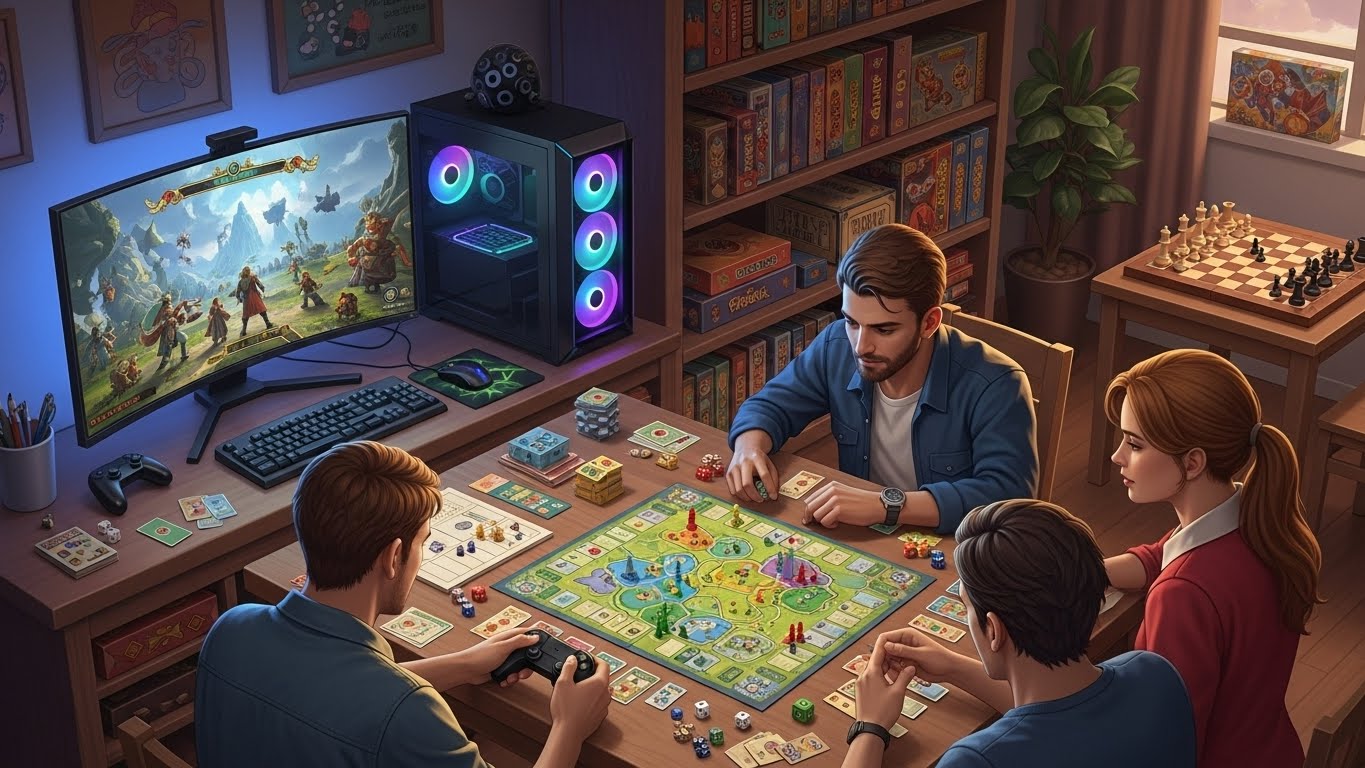
Games have always been more than just a pastime. They’re a reflection of human creativity, strategy, imagination, and emotion. Whether played on a field, on a board, or through a glowing screen, games hold a unique place in our lives. From the earliest civilizations to the modern digital era, people have always found ways to play. Games entertain us, connect us, and even teach us lessons that go beyond winning or losing.
As technology evolved, so did the world of games. What began as simple physical competitions or storytelling activities has now become a massive global industry that influences culture, technology, and even education. Today, games are not limited to children or leisure hours—they are a lifestyle, a career, and in many ways, an art form. Let’s dive deep into the fascinating universe of games, exploring their origins, evolution, psychological impact, and what the future holds.
The Ancient Roots of Games
The idea of playing is as old as humanity itself. Archaeologists have discovered game pieces made of stones, bones, and carved wood dating back thousands of years. The ancient Egyptians played a board game called Senet, which symbolized the journey to the afterlife. Similarly, the game of Go, originating in China over 2,500 years ago, is still played worldwide today.
In Greece, games were part of culture and education. The Olympic Games, which began in ancient Greece, were more than a sporting event—they were celebrations of human potential. Every civilization, from the Mayans to the Romans, had its own unique way of playing. Whether through physical contests or strategic board games, people used play to socialize, compete, and express themselves.
The Birth of Modern Gaming
Fast forward to the 19th and 20th centuries, and games began to take a more recognizable modern form. Board games like Monopoly, Scrabble, and Chess became household names. They brought families and friends together, allowing people to enjoy hours of mental challenge and laughter.
The 20th century also gave rise to sports as global entertainment. Football, cricket, basketball, and other organized sports evolved into massive cultural events. The creation of leagues, tournaments, and televised matches turned players into global icons. Games were no longer just about fun—they became about identity, pride, and performance.
Then came a revolution that changed everything: electronic gaming.
The Rise of Video Games
The 1970s marked the dawn of a new era with the birth of video games. The earliest arcade hits like Pong and Space Invaders introduced people to digital play. These games were simple by today’s standards, but they captured hearts everywhere. The idea of controlling movement on a screen was revolutionary.
The 1980s and 1990s saw the rise of consoles such as Atari, Nintendo, and Sega. Suddenly, gaming was no longer confined to arcades—it entered living rooms. Iconic characters like Mario, Sonic, and Link became legends. The sound of 8-bit music and pixelated graphics defined an entire generation’s childhood.
Video games grew from simple entertainment to complex storytelling experiences. Games like Final Fantasy, The Legend of Zelda, and Metal Gear Solid brought cinematic narratives into play. Players weren’t just controlling characters; they were living stories.
The Golden Age of Gaming
By the early 2000s, gaming had become one of the biggest entertainment industries in the world. Consoles like PlayStation and Xbox pushed boundaries in graphics, sound, and interactivity. PC gaming also flourished, giving rise to massive online communities and multiplayer experiences. Games such as World of Warcraft, Counter-Strike, and The Sims became cultural phenomena.
At the same time, handheld consoles like Game Boy and Nintendo DS allowed gaming on the go. People could now play anywhere, anytime. This accessibility expanded gaming’s reach beyond hardcore fans to everyday people.
What truly made this period special was creativity. Developers experimented with genres—from horror and strategy to simulation and open-world exploration. Games became an art form, blending visuals, music, writing, and design in ways no other medium could replicate.
The Psychology of Playing Games
One of the most fascinating aspects of gaming is its psychological impact. Games engage the human brain in unique ways. They trigger dopamine—the reward chemical—making us feel joy and satisfaction when we achieve goals, solve puzzles, or win matches.
But it’s not just about pleasure. Games teach us patience, resilience, and teamwork. Strategy games enhance decision-making. Story-driven games improve empathy by allowing players to step into another person’s world. Even simple mobile games sharpen reflexes and problem-solving skills.
Researchers have also found that games can help with mental health. They offer escape, relaxation, and even therapy. For many people, games provide a sense of accomplishment that may be missing in real life. However, moderation is key. Excessive gaming can lead to isolation or dependency, so balance is essential.
The Social Connection in Gaming
Contrary to the belief that games make people anti-social, the truth is the opposite. Gaming has become one of the most powerful social platforms of the modern era. Multiplayer games, voice chats, and online communities connect millions of people across the world. Players build friendships that often last years, even if they never meet in person.
Games like Fortnite, PUBG, and Minecraft have redefined what it means to “hang out.” Virtual worlds allow players to collaborate, create, and compete. Esports, the competitive side of gaming, has turned professional players into celebrities. Tournaments fill stadiums and attract viewers online in numbers that rival traditional sports.
Gaming is no longer a solitary hobby—it’s a global network of shared experiences.
The Evolution of Mobile Gaming
When smartphones entered the picture, gaming reached an entirely new audience. Mobile games like Angry Birds, Candy Crush, and Clash of Clans made gaming accessible to everyone. You didn’t need a console or computer—just a phone in your hand.
Mobile gaming’s success lies in its simplicity and convenience. Games are quick to play, easy to understand, and perfect for short bursts of time. Over the years, mobile graphics have improved so much that even complex titles now run smoothly on portable devices.
This rise has also introduced new forms of creativity. Augmented reality games blend digital play with the real world. Titles like Pokémon GO encouraged players to explore their surroundings while gaming. Mobile games have also opened doors for indie developers to showcase their talent without massive budgets.
The Artistic Side of Games
Today, games are often recognized as a legitimate form of art. Developers pour passion into creating worlds that are visually stunning and emotionally rich. The lighting, music, and character design are crafted with precision. Games such as Journey, The Last of Us, and Red Dead Redemption 2 are often praised for their storytelling, emotional depth, and cinematic beauty.
Unlike movies, games allow players to participate in the story. That interactivity transforms them into a unique medium where the player’s choices shape the narrative. This gives rise to deeper connections with characters and outcomes, making gaming a personal experience.
Even the aesthetics of game design—how levels are structured, how color guides the player, how silence enhances emotion—show how artistic the medium has become.
Gaming as a Career
What was once dismissed as “just playing” has now become a legitimate profession. The gaming industry offers countless career paths: game design, programming, writing, animation, testing, and marketing. Esports players earn sponsorships, streamers build massive audiences, and content creators make gaming their full-time job.
Platforms for streaming have allowed gamers to share experiences with millions. Viewers tune in not just for gameplay, but for personalities and entertainment. Game developers themselves are now seen as celebrities—creators whose visions shape the future of interactive art.
The gaming industry today generates billions of dollars annually, surpassing movies and music combined. This economic power shows how far games have come—from toys to global entertainment giants.
The Role of Storytelling in Games
Every great game tells a story, even if it’s a simple one. Whether it’s saving a kingdom, solving a mystery, or surviving a post-apocalyptic world, storytelling gives purpose to play. In modern games, writing is as crucial as programming or design.
Narrative-driven games like Life is Strange, God of War, or The Witcher 3 are perfect examples of emotional storytelling. They explore themes like family, morality, love, and loss through interactive choices. The player’s actions influence outcomes, making the story feel personal and alive.
This narrative connection is why players remember games for decades. It’s not just about the mechanics—it’s about the journey and the emotions that come with it.
How Technology Shapes Games
The evolution of gaming technology is breathtaking. From 2D sprites to hyper-realistic 3D environments, technology has redefined immersion. Virtual Reality (VR) and Augmented Reality (AR) bring players inside the game world, offering experiences that feel almost tangible. Artificial Intelligence allows enemies to adapt and learn, making gameplay more dynamic.
Cloud gaming is another revolutionary step. It eliminates the need for powerful hardware, allowing players to stream games instantly. This democratization means anyone can access top-tier games regardless of device limitations.
Sound design, motion capture, and physics engines have also advanced to the point where games now rival Hollywood productions. Every detail, from footsteps in the sand to sunlight flickering through trees, is carefully crafted to enhance immersion.
The Educational Power of Games
Beyond entertainment, games have immense educational potential. Educational games teach subjects like math, science, and language in engaging ways. Simulation games help students learn real-world systems—from city planning to space exploration.
Even traditional games can develop soft skills such as leadership, cooperation, and problem-solving. Serious games are now used in training for military, medicine, and even corporate management. They allow safe environments for learning through trial and error.
Teachers have started integrating gamification—using game principles like points, rewards, and levels—into classrooms to make learning more interactive. Games have transformed from distractions into tools for education.
Challenges in the Gaming Industry
Despite its success, gaming faces challenges. One major issue is addiction. The immersive nature of games can lead some players to lose track of time and responsibilities. Developers are now exploring ways to promote healthy gaming habits.
Another concern is toxicity in online communities. Competitive environments sometimes breed negative behavior, but many developers are taking steps to create safer, more inclusive spaces.
Representation is another growing conversation. Players come from all backgrounds, and games are increasingly expected to reflect diversity in characters, stories, and experiences.
Finally, the rapid pace of technology can create inequality. Not everyone can afford the latest devices or high-speed internet. Ensuring that games remain accessible to all is a challenge the industry continues to address.
The Future of Gaming
Looking ahead, the future of gaming seems limitless. Virtual reality is set to become more immersive, blending physical and digital experiences seamlessly. Artificial intelligence will continue to make games smarter and more adaptive. The concept of the “metaverse”—a shared digital universe—could change how people live, work, and play.
Indie developers will continue to innovate, offering fresh ideas outside of mainstream trends. Cloud gaming will make high-quality experiences available to everyone, regardless of location or hardware.
Games will also become more socially and emotionally aware. Developers are experimenting with stories that deal with real-life themes like identity, environment, and relationships. The line between game and reality will continue to blur, creating experiences that are both entertaining and thought-provoking.
Conclusion
Games are more than entertainment—they are an essential part of human expression. From ancient board games carved in stone to sprawling digital worlds rendered in stunning detail, the spirit of play has remained constant through the ages. Games bring people together, challenge our minds, and inspire creativity.
In every corner of the world, people play to compete, to learn, to escape, and to connect. The universality of gaming reminds us that no matter how different we are, the desire to play unites us all.
The world of games is not just about winning or losing. It’s about exploration, imagination, and the endless joy of discovering new worlds—both within the screen and within ourselves.