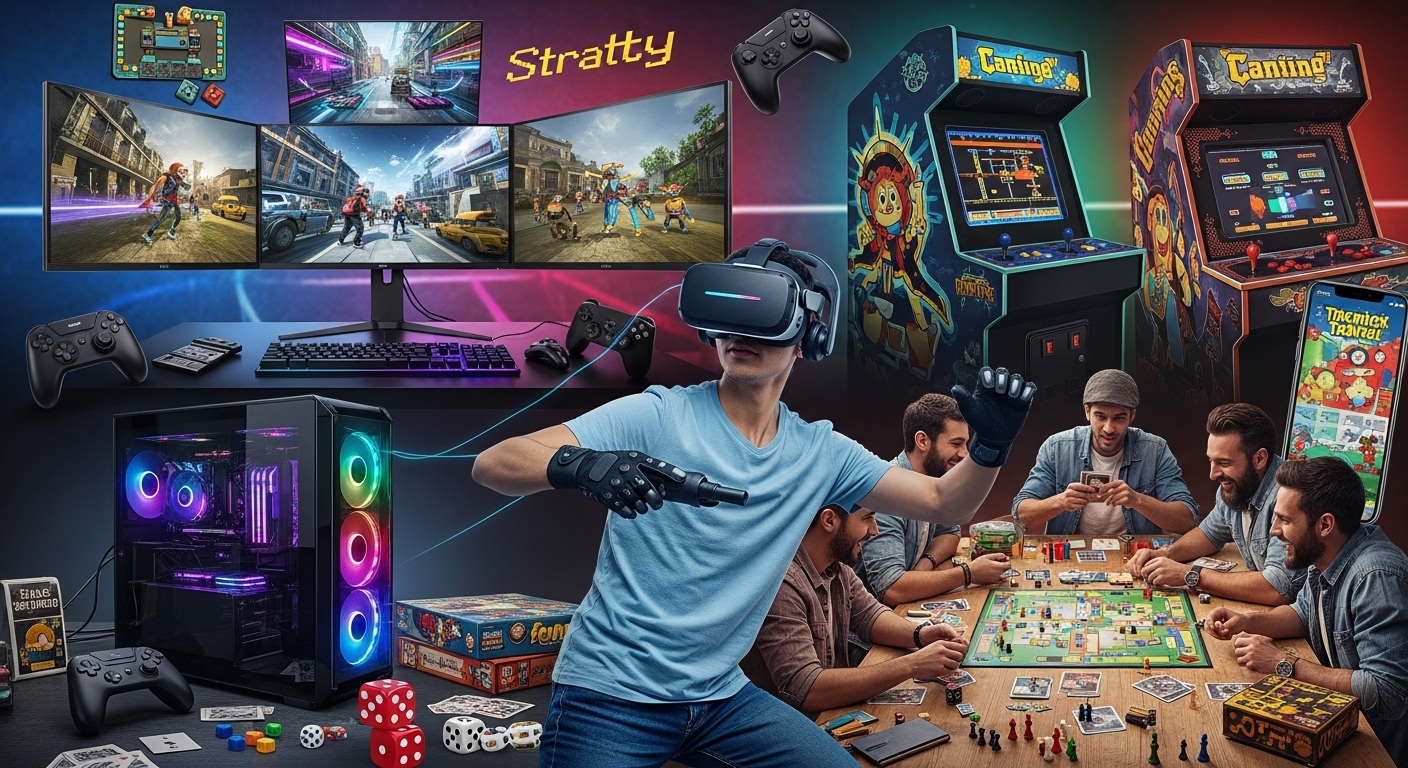

The world of gaming has evolved beyond mere entertainment to become a global cultural force. From its humble beginnings as pixelated screens and simple sound effects to its current form, which features photorealistic graphics and immersive experiences, gaming has transcended being a hobby to become an art form, a social activity, and a competitive industry. This blog post will explore the rise of gaming, its impact on society, and the future of the industry.
The Genesis of Video Gaming
Video gaming, as we know it, had its origins in the mid-20th century. The first games were simple and rudimentary, primarily serving as experiments in computer technology. In the 1950s and 1960s, pioneers like William Higinbotham and Steve Russell developed early versions of what we would now consider video games. Spacewar! (1962) was one of the first widely recognized video games, created by Russell on a PDP-1 computer at MIT. Despite being relatively primitive by today’s standards, Spacewar! set the stage for the next decade’s worth of developments.
The 1970s marked the first major commercial success in the gaming world with the introduction of arcade games. Pong, created by Atari in 1972, is often considered the first commercially successful video game. The simplicity of a two-player ping-pong-style game captured the public’s imagination, and arcade gaming became a nationwide phenomenon. Over the next few years, more arcade games emerged, including Space Invaders, Pac-Man, and Donkey Kong, all of which became cultural icons in their own right.
By the late 1970s and early 1980s, home consoles were introduced, allowing people to play games in the comfort of their living rooms. The Atari 2600, released in 1977, was one of the first home consoles that featured interchangeable game cartridges. This shift in how video games were accessed was a pivotal moment in the industry, making gaming a mainstream activity.
The Golden Age of Gaming: The 1980s and 1990s
The 1980s and 1990s marked the “Golden Age” of gaming, as the industry saw major technological advancements and the emergence of iconic franchises. The launch of the Nintendo Entertainment System (NES) in 1985 brought gaming to an even larger audience. Games like Super Mario Bros., The Legend of Zelda, and Metroid revolutionized how games were designed and played, introducing more complex gameplay mechanics and memorable characters.
The introduction of 16-bit consoles, such as the Sega Genesis, expanded the graphical capabilities of video games. The early 1990s saw the rise of some of the most influential gaming franchises of all time, including Sonic the Hedgehog and Street Fighter II. These games pushed the boundaries of graphics, sound, and gameplay, becoming mainstays in arcades and at home.
However, the biggest breakthrough during the 1990s was the arrival of 3D gaming. The Sony PlayStation, released in 1994, was one of the first consoles to bring fully 3D worlds to life. Titles such as Final Fantasy VII, Gran Turismo, and Metal Gear Solid introduced cinematic storytelling, lush 3D environments, and complex narratives, making gaming a more immersive experience. The Nintendo 64, released in 1996, also took 3D gaming to the next level, offering iconic titles like Super Mario 64 and The Legend of Zelda: Ocarina of Time.
The growth of online gaming also started in the late 1990s, with games like Warcraft II and StarCraft allowing players to compete against one another over the internet. The foundations for modern multiplayer gaming were laid during this time, setting the stage for the next generation of games that would continue to grow the social aspect of gaming.
The Rise of Online Gaming and Esports
The early 2000s saw the rise of broadband internet, which revolutionized the gaming experience. With the expansion of online multiplayer games, players could now connect with each other from all over the world. Halo 2, released in 2004, was one of the first major games to incorporate online multiplayer on consoles, and it helped establish Xbox Live as a cornerstone of the console gaming experience.
In addition, the launch of World of Warcraft (2004) marked a turning point for massively multiplayer online role-playing games (MMORPGs). WoW offered an expansive virtual world where players could interact with one another, form guilds, and explore a rich fantasy universe. The game’s success set the stage for a whole generation of MMORPGs that would keep players engaged for thousands of hours.
The late 2000s and early 2010s also saw the rise of esports. Competitive gaming transformed from casual tournaments to professional leagues, attracting millions of viewers around the globe. Games like League of Legends, Dota 2, and Counter-Strike became the centerpieces of esports competitions, offering large cash prizes and global recognition. As esports grew, streaming platforms like Twitch emerged, allowing gamers to watch live broadcasts of their favorite players and teams. What was once a niche hobby became a multi-million-dollar industry, with dedicated fanbases and professional athletes making a career out of gaming.
Gaming Becomes Mainstream
By the 2010s, gaming had become a dominant force in the entertainment industry. The advent of HD graphics and gaming consoles like the PlayStation 4 and Xbox One allowed developers to push the visual quality of games to unprecedented heights. With games like The Witcher 3, Red Dead Redemption 2, and Grand Theft Auto V, gaming was no longer just an activity—it became a form of digital art.
The gaming industry also saw the rise of indie games during this period. Indie developers, often working with smaller budgets, began to create innovative, experimental games that pushed the boundaries of storytelling and gameplay. Titles like Journey, Limbo, and Undertale became massive successes, showing that great games didn’t always need massive budgets or flashy graphics.
One of the most significant trends in the 2010s was the rise of free-to-play games. Games like Fortnite, League of Legends, and Apex Legends revolutionized the gaming market by offering free access to games with optional in-game purchases. This “freemium” model changed the way games were monetized, allowing players to enjoy full games without having to pay upfront, and instead supporting the developers through cosmetic items, battle passes, and other microtransactions.
The Social Aspect of Gaming: A New Era of Connectivity
Today, gaming is one of the most social activities on the planet. Whether through online multiplayer games or social media platforms dedicated to gaming, players can interact with others in ways that were once unimaginable. Fortnite, for example, has become more than just a game—it’s a cultural phenomenon. It hosts in-game events, concerts, and collaborations with celebrities, creating a shared space where millions of players can come together for virtual experiences.
Streaming has also played a crucial role in turning gaming into a social activity. Platforms like Twitch and YouTube allow gamers to broadcast their gameplay to thousands, if not millions, of viewers. The rise of content creators has blurred the lines between professional gaming and entertainment. Many gamers now make a living by streaming their gameplay, creating video content, and engaging with their communities on social media.
Beyond gaming itself, the impact of gaming culture is evident in the rise of gaming conventions, such as E3, PAX, and BlizzCon, which bring together developers, fans, and media from around the world. These events have become the epicenter of gaming culture, where new games are announced, major influencers meet their fans, and the latest innovations are showcased.
The Psychological Impact of Gaming
While gaming has brought countless benefits, including improved problem-solving skills, hand-eye coordination, and social connections, it has also raised concerns about its impact on mental health and well-being. Studies have shown that video games can have both positive and negative psychological effects.
On the positive side, games that require strategy and problem-solving, such as The Legend of Zelda or Portal, can improve cognitive abilities and help players think critically. Multiplayer games encourage teamwork, communication, and social interaction, which can foster a sense of belonging and help individuals build friendships.
However, excessive gaming has been linked to a range of potential negative effects. Video game addiction, while not officially recognized as a mental disorder, can lead to social isolation, neglect of responsibilities, and physical health issues, such as poor posture and lack of exercise. It’s important to recognize that, like any other form of entertainment, moderation is key when it comes to gaming.
The rise of violent video games has also raised concerns about their potential to promote aggression. While research in this area remains inconclusive, many experts agree that exposure to violent media should be monitored, particularly among children and teenagers. However, most gamers engage with video games for entertainment and escapism, and the vast majority do not exhibit violent behavior.
The Future of Gaming: Virtual Reality and Beyond
The future of gaming is an exciting prospect filled with innovation and new experiences. Virtual reality (VR) and augmented reality (AR) are likely to be at the forefront of gaming’s next evolution. VR gaming allows players to fully immerse themselves in virtual worlds, interacting with environments and characters in ways that were previously impossible. With devices like the Oculus Rift, HTC Vive, and PlayStation VR, VR gaming has the potential to revolutionize how we experience not only games but the digital world as a whole.
Cloud gaming is another area that is expected to shape the future of the industry. With services like Google Stadia, Microsoft’s xCloud, and NVIDIA GeForce Now, players can stream games directly from the cloud, eliminating the need for expensive hardware. This could make high-quality gaming accessible to a broader audience, regardless of their device’s specifications.
Artificial intelligence (AI) is another exciting frontier for gaming. Developers are increasingly using AI to create dynamic and reactive game worlds that evolve based on player decisions. Games like Red Dead Redemption 2 already feature highly sophisticated AI systems that control everything from NPC behavior to environmental interactions. As AI continues to advance, we can expect even more realistic and immersive virtual worlds.
Conclusion: The Enduring Power of Gaming
From its humble beginnings as a technological experiment to its current place as one of the most influential and profitable industries in the world, gaming has come a long way. It has reshaped entertainment, influenced popular culture, and created new forms of social interaction. As the industry continues to evolve, there’s no telling where gaming will go next. One thing is certain, however: the future of gaming is bright, and it will continue to captivate and inspire people around the world for generations to come.
Gaming is more than just a pastime. It’s a powerful, ever-evolving form of entertainment that brings people together, challenges our perceptions of reality, and shapes the world we live in. Whether you’re a casual gamer or a competitive player, gaming will continue to offer new worlds, new adventures, and endless possibilities for exploration.
This post delves into the history, impact, and future of gaming, exploring its social, psychological, and cultural significance. It highlights the evolving nature of gaming and provides a comprehensive overview of how it has changed the entertainment landscape.