

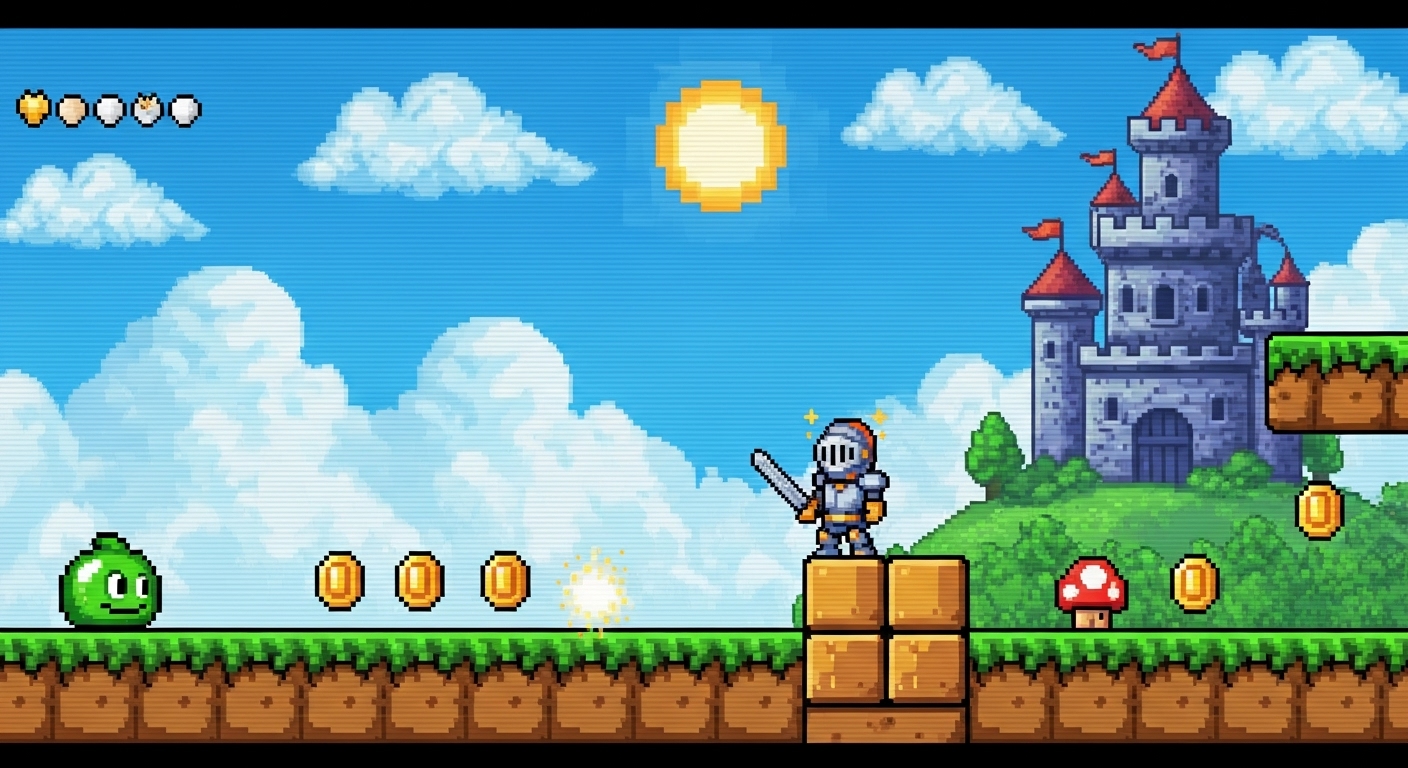
Introduction to Pixel Art in Gaming
In the modern era of high-definition graphics and cinematic game design, one would expect pixel art to have been left in the past. Yet, retro-inspired pixel games have not only survived but flourished, creating a cultural and artistic movement that continues to expand in both indie and mainstream gaming. The charm of pixel art, coupled with nostalgia, accessibility, and innovative storytelling, has propelled this style into a golden age of its own.
While the video game industry pushes graphical realism to new heights with photorealistic landscapes and lifelike character models, many players find themselves equally drawn to the simplicity and warmth of pixelated graphics. This rise of retro-inspired pixel games is not merely about reliving the past; it is about rediscovering the artistry of minimalism, the joy of gameplay-driven design, and the endless creative potential within constraints.
This blog explores the evolution, popularity, and cultural significance of retro-inspired pixel games, the reasons behind their rise, and their enduring place in the future of the gaming industry.
The Origins of Pixel Games
Pixel art has been a cornerstone of gaming since its earliest days. In the 1970s and 1980s, technological limitations made pixel art the default choice rather than a stylistic decision. Games like Space Invaders, Pac-Man, and Super Mario Bros. had to rely on a limited number of pixels and colors to create recognizable characters and worlds.
Despite these limitations, early developers displayed remarkable creativity. They crafted memorable characters, imaginative levels, and addictive gameplay within the tight boundaries of pixel grids. These early designs left a lasting impact on the gaming community, proving that simplicity could evoke powerful emotions and create unforgettable experiences.
Pixel art in this era was not a nostalgic nod but a necessity. The hardware of consoles like the Atari 2600, the Nintendo Entertainment System, and the Sega Master System could not handle realistic visuals. Yet, the charm of pixel graphics emerged naturally, shaping the identity of an entire industry.
Nostalgia as a Driving Force
One of the strongest factors fueling the rise of retro-inspired pixel games is nostalgia. Gamers who grew up in the 1980s and 1990s often seek to relive their childhood experiences through games that remind them of simpler times. These players find comfort in the bright colors, chiptune soundtracks, and blocky characters that bring back memories of sitting in front of CRT televisions or handheld consoles.
But nostalgia alone does not explain the ongoing success of pixel art games. Younger players who never experienced those eras firsthand are also drawn to these titles. For them, pixel games offer a distinctive aesthetic that contrasts sharply with the hyper-realism of many modern titles. Instead of being outdated, pixel art feels fresh, stylized, and unique in today’s diverse gaming landscape.
The Indie Game Revolution
The resurgence of pixel art is closely tied to the rise of independent game development. In the early 2000s, indie developers began creating games outside the constraints of large studios. Limited budgets meant that photorealistic graphics were often out of reach. Pixel art provided a practical alternative that was easier to create while still leaving room for deep creativity.
Indie developers embraced pixel art not only for its accessibility but also for its potential to stand out. The aesthetic became a hallmark of indie culture, associated with innovation, experimentation, and authenticity. Titles like Cave Story, Celeste, Hyper Light Drifter, and Undertale demonstrated how pixel art could be combined with modern design philosophies to produce emotionally resonant, critically acclaimed games.
Indie pixel games also tapped into digital distribution platforms, allowing developers to reach global audiences without physical copies. This democratization of publishing meant that pixel art games could thrive without needing the massive resources of AAA studios.
The Artistic Appeal of Pixel Graphics
Pixel art is far from simplistic. At its best, it is a form of digital minimalism that communicates more with less. Each sprite, each animation frame, and each carefully placed pixel must serve a purpose. This constraint fosters creativity, forcing artists to convey emotions, movement, and storytelling through subtle design choices.
Pixel art also embraces abstraction. Instead of striving for photorealism, it suggests shapes and ideas, allowing players’ imaginations to fill in the details. A few pixels may form a character’s face, but in the mind of the player, that face becomes expressive and alive. This collaborative relationship between art and imagination is one reason pixel art feels so engaging.
Furthermore, retro-inspired pixel games often pair their visuals with atmospheric soundtracks that echo classic chiptunes while integrating modern musical techniques. The combination creates a distinct sensory identity, bridging the old and the new.
Storytelling in Pixel Games
One misconception about pixel games is that their retro look limits narrative depth. In reality, many of the most powerful storytelling experiences in modern gaming come from pixel-based titles. Games like Undertale use simple graphics to focus attention on characters, dialogue, and player choice. Similarly, Celeste pairs challenging platforming mechanics with a heartfelt story about mental health and personal growth.
Pixel games often lean into symbolism and metaphor. Because they do not attempt photorealism, they can convey abstract ideas more naturally. A pixelated landscape can symbolize memory, dreams, or emotion without breaking immersion. This approach resonates with players seeking deeper meaning beyond visual spectacle.
Accessibility and Development Efficiency
Pixel art games are not only appealing to players but also to developers. They require fewer resources than high-end 3D games, making them more accessible to small teams or solo creators. While crafting pixel art still demands skill and time, it does not require the massive asset pipelines of photorealistic titles.
This accessibility allows for experimentation. Developers can take creative risks without the pressure of massive budgets. As a result, pixel art games often explore unconventional mechanics, unique storytelling approaches, and niche themes that AAA titles might avoid.
For players, the lighter system requirements of pixel games mean broader accessibility. They can run on a wide range of devices, from powerful gaming PCs to mobile phones and handheld consoles. This universality has helped pixel games reach global audiences.
Pixel Games as a Cultural Phenomenon
Retro-inspired pixel games have become more than just entertainment—they are cultural artifacts that celebrate gaming history. By embracing the visual language of early consoles, these games pay homage to the pioneers of the medium while redefining pixel art for new generations.
Pixel aesthetics also spill into other areas of culture. Pixelated designs appear in fashion, graphic design, and even digital art exhibitions. The style has transcended gaming to become a recognized visual language of the digital age.
The popularity of streaming platforms has also amplified the cultural reach of pixel games. Streamers often showcase indie pixel titles, introducing them to massive audiences who may not have discovered them otherwise. These games’ approachable visuals and engaging mechanics make them particularly shareable in live playthroughs.
Blending Old and New
What makes retro-inspired pixel games especially appealing is their balance between old-school aesthetics and modern innovation. Developers borrow the visual style of the past but integrate contemporary mechanics, narratives, and quality-of-life features.
For example, while classic games often had punishing difficulty spikes, modern pixel games allow for accessibility options like adjustable difficulty, save states, and tutorials. Similarly, advanced physics engines, dynamic lighting, and procedural generation can enhance pixel graphics, giving them a richness beyond what was possible in the 1980s and 1990s.
This blending ensures that retro-inspired games are not mere replicas of the past but reimagined experiences that appeal to both nostalgic players and newcomers.
Examples of Iconic Retro-Inspired Pixel Games
Celeste
A platformer celebrated for its tight controls and emotional depth. Its pixel visuals are vibrant yet minimal, allowing players to focus on the challenging yet rewarding gameplay.
Undertale
A groundbreaking RPG that redefined how players interact with game mechanics and morality. Its pixel graphics, combined with innovative storytelling, made it an instant classic.
Stardew Valley
This farming simulator revived the genre with pixel aesthetics that evoked classic titles while adding modern layers of customization, relationships, and community-building.
Shovel Knight
A homage to the NES era that blended retro graphics with polished mechanics and level design, showing how modern developers could elevate old-school inspirations.
Hyper Light Drifter
A visually stunning pixel game that used color, atmosphere, and sound design to create a hauntingly beautiful world, proving that pixel art can achieve artistic sophistication.
Why Players Love Retro-Inspired Pixel Games
Players are drawn to these games for multiple reasons:
- Nostalgia – Older gamers relive the aesthetics of their childhood.
- Artistic Charm – The minimalism of pixel art feels unique in an industry dominated by realism.
- Gameplay Focus – Retro-inspired games often prioritize tight mechanics and innovation.
- Accessibility – Pixel games can run on a wide variety of hardware.
- Emotional Resonance – Pixel art leaves room for imagination, making characters and stories feel personal.
Challenges of Retro-Inspired Pixel Games
Despite their popularity, pixel games face challenges. Oversaturation in the indie market means that not every pixel title gains recognition. Some critics argue that reliance on nostalgia can stifle innovation. Developers must strike a balance between honoring the past and offering fresh experiences.
Another challenge is perception. Some players dismiss pixel games as outdated or simplistic, not realizing the depth and artistry involved. Educating audiences on the creative value of pixel art is essential for sustaining the genre’s growth.
The Future of Retro-Inspired Pixel Games
The rise of retro-inspired pixel games shows no sign of slowing. As long as developers continue to innovate, pixel art will remain relevant. Advances in AI, procedural generation, and dynamic lighting could further expand the possibilities for pixel aesthetics.
Pixel games are also likely to play an important role in mobile gaming, handheld consoles, and virtual reality. Their lightweight nature makes them ideal for emerging platforms, ensuring they will remain accessible in an evolving technological landscape.
Beyond gaming, pixel art will continue to inspire digital culture, merging with new media forms like augmented reality and interactive storytelling. Far from being a relic, pixel games are shaping the future of how art and technology intersect.
Conclusion
The rise of retro-inspired pixel games reflects a unique moment in gaming history where past and present collide. These games celebrate the origins of the industry while pushing boundaries through innovation, storytelling, and artistry. Pixel art has proven to be more than nostalgia—it is a timeless medium that continues to inspire players and developers alike.
As the industry grows more diverse, pixel games remind us that technological advancement is not the only measure of progress. Sometimes, the simplest visuals can evoke the most powerful emotions, creating experiences that last far longer than the latest graphical showcase.
Retro-inspired pixel games are not just a trend; they are a cultural movement that proves the beauty of simplicity, the creativity of constraint, and the enduring love for the pixel.